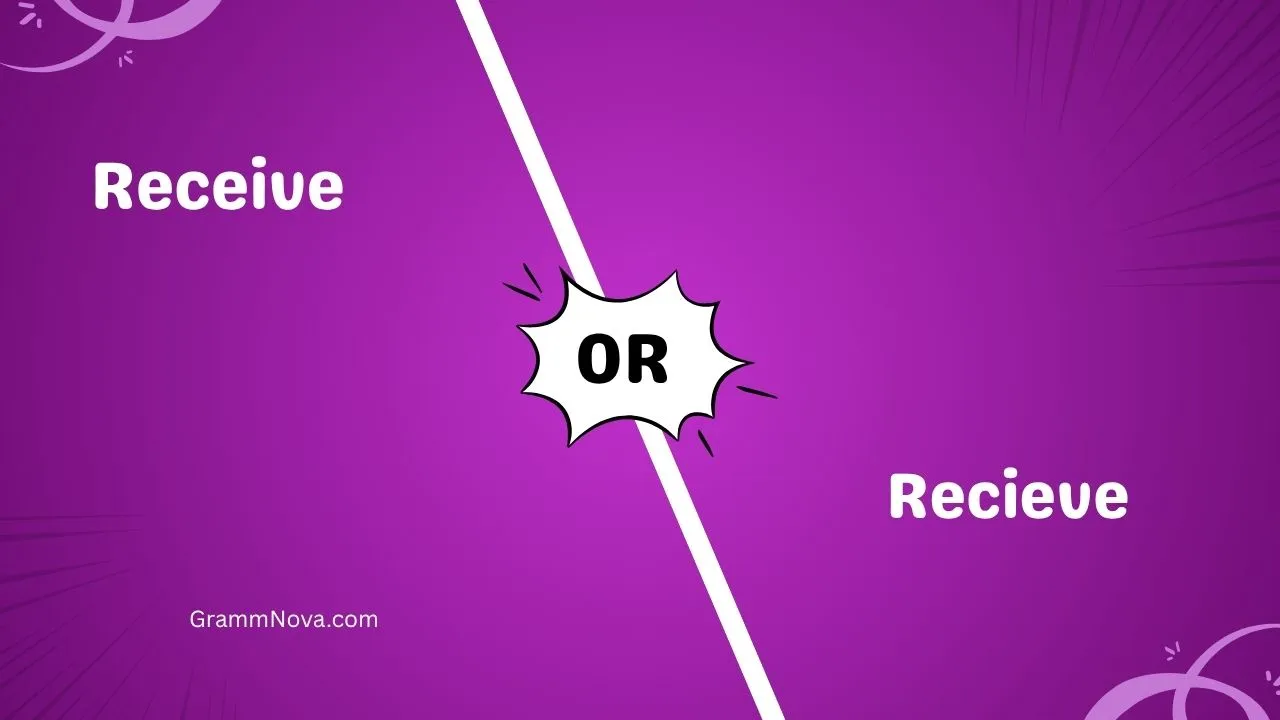
Have you ever typed recieve, stared at the screen for a few seconds, and wondered if something looked wrong? You’re not alone. Thousands of people search for Receive or Recieve every day because it’s one of the easiest English spelling mistakes to make.
The two words look almost identical, yet only one is correct. A single misplaced letter can affect school assignments, professional emails, blog posts, and even job applications, making your writing appear less accurate than it really is.
The confusion usually comes from the order of the letters “i” and “e,” a pattern that has puzzled English learners and native speakers for generations. The good news is that this mistake is incredibly easy to fix once you understand the simple rule behind it.
✅ Quick Answer (Simple Summary)
“Receive” is the correct spelling. “Recieve” is incorrect and commonly made due to spelling confusion.
What Does “Receive” Mean in English?
The word receive is a verb used in English when someone gets something, accepts something, or is given something.
📌 Simple Meaning:
👉 To get something from someone or somewhere.
✨ Meaning of “Receive” with Examples
Here are clear and easy examples to understand the word:
- I will receive a package tomorrow.
- She received a gift on her birthday.
- We receive emails every day.
- He received a message from his teacher.
- They will receive their results next week.
👉 In all cases, “receive” means to get or accept something.
❌ What About “Recieve”?
The spelling “recieve” is incorrect in standard English.
📌 Important Fact:
👉 English spelling rule:
“i before e except after c” applies here.
So:
- ✔️ receive (correct)
- ❌ recieve (wrong)
📊 Receive vs Recieve: Comparison Table
| Feature | Receive | Recieve |
| Correct Spelling | ✔️ Yes | ❌ No |
| Grammar Status | Standard English | Spelling mistake |
| Meaning | To get something | No valid meaning |
| Usage | Formal + informal writing | Not used |
| Example | I receive money monthly. | ❌ Incorrect word |
📖 Why Do People Spell It “Recieve”? 🤯
This mistake happens for a few common reasons:
🔹 1. “I before E” confusion
Many learners remember the rule incorrectly and apply it blindly.
🔹 2. Pronunciation influence
The word sounds like “ree-seeve,” which confuses spelling.
🔹 3. Typing habits
Fast typing leads to swapped letters.
🔹 4. Lack of exposure
Beginners may not see the correct spelling often.
🧠 Easy Memory Trick to Remember “Receive”
Here’s a simple trick:
👉 “C comes before E, so E comes after C in receive.”
Or even easier:
👉 “We RECEIVE gifts, not RECIEVE mistakes.” 🎁
✨ How to Use “Receive” in Sentences
Let’s look at different situations where you can use the word.
📧 Email Examples
- You will receive a confirmation email shortly.
- I received your request and will respond soon.
🏫 Academic Writing
- Students receive feedback after exams.
- She received high marks in mathematics.
🗞️ News Writing
- The city will receive heavy rainfall this week.
- The company received government approval.
💬 Everyday Conversation
- Did you receive my message?
- I didn’t receive any calls today.
📱 Social Media Usage
- Just received my new phone 📱😍
- Feeling happy to receive so much love ❤️
🌍 British vs American English Usage
Good news 👍 — there is no difference between British and American English for this word.
| Region | Spelling |
| British English 🇬🇧 | receive |
| American English 🇺🇸 | receive |
👉 Both use the same spelling: receive
❌ Common Mistakes with “Receive”
Here are errors learners should avoid:
❌ Mistake 1: Using “recieve”
✔ Correct: I receive your message.
❌ Mistake 2: Wrong verb tense usage
✔ Correct: I received the letter yesterday.
❌ Mistake 3: Overthinking spelling rules
✔ Tip: Memorize the correct form instead of guessing.
📚 Grammar Tips for Correct Usage
✔ Use “receive” when:
- Talking about getting something
- Writing formal or informal sentences
- Using present tense
✔ Use “received” when:
- Past tense is needed
- Something already happened
Examples:
- I receive daily updates.
- I received your email yesterday.
🧾 Real-Life Usage Examples 🌍
📧 Professional Email
Thank you for your message. I have received your application.
🏫 School Context
Students receive certificates after completion.
🗣️ Spoken English
I just received a call from my friend.
📰 News Context
The country received international support during the crisis.
💬 Informal Chat
OMG I just received my parcel 😍📦
🧠 Quick Spelling Rule to Remember
👉 “C comes first in receive, so don’t switch i and e.”
Think of it like:
You receive a CErtificate, not a “cie”tificate 😄
❓ FAQs: Receive or Recieve
1. What is the correct spelling: receive or recieve?
✔ “Receive” is the correct spelling.
2. Why is “recieve” wrong?
Because it breaks the standard English spelling rule.
3. What does receive mean?
It means to get or accept something.
4. Is receive British or American English?
Both use the same spelling: “receive.”
5. How do you remember the spelling of receive?
Remember: “C before E → receive.”
6. Is recieve a real word?
No, it is considered a spelling mistake.
7. What is the past tense of receive?
The past tense is “received.”
Conclusion:
Understanding the difference between receive and recieve is simple once you remember the correct spelling rule. Receive is the only correct spelling in English, while recieve is a common misspelling that should always be avoided. Keeping the phrase I before E except after C in mind can help you remember the correct form in most situations.
Whether you’re writing emails, school assignments, blog posts, or professional documents, using receive correctly improves your grammar and makes your writing more polished. With regular practice and careful proofreading, you’ll avoid this common spelling mistake and write with greater confidence every time.

I am James Carter, a passionate English grammar writer who loves simplifying complex language rules for learners. I am dedicated to helping students improve their writing, speaking, and vocabulary skills in an easy and practical way. I am focused on creating clear, engaging, and helpful content that makes grammar learning enjoyable.