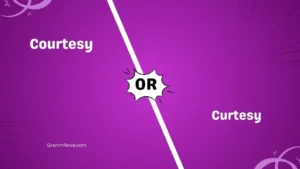
English is full of words that seem almost identical but carry completely different meanings, and Courtesy vs Curtesy is one of the most commonly misunderstood pairs.
At first glance, the difference is just a single letter, making it easy to assume they are simply alternative spellings of the same word. In reality, they describe two entirely different ideas.
Courtesy is an everyday word that represents kindness, respect, good manners, and polite behavior, while curtesy is a traditional term for a graceful bow performed by women or girls, often during formal ceremonies or historical events.
Quick Answer
Courtesy is the correct and modern English word meaning politeness and good manners.
Curtesy is an old legal term used in historical law and is rarely used in modern English.
Meaning of Courtesy
The word courtesy refers to polite behavior, respect, and good manners shown toward others.
What Courtesy Means
Courtesy is all about:
- Being polite and respectful 😊
- Showing kindness in behavior
- Using good manners in speech and action
- Respecting social rules and etiquette
Examples of Courtesy in Sentences
- He showed great courtesy to the guests.
- Please extend basic courtesy to everyone in the meeting.
- It is a courtesy to say thank you.
- The driver stopped out of courtesy.
- She handled the complaint with professional courtesy.
Meaning of Curtesy
The word curtesy is an old legal term from English common law.
What Curtesy Means
Curtesy refers to:
- A husband’s legal right to his deceased wife’s property (in historical law)
- A term used only in legal history books
- Rarely used in modern English
Examples of Curtesy in Sentences
- The law of curtesy existed in medieval England.
- Curtesy rights were once part of inheritance law.
- Historians studied the concept of curtesy in old legal systems.
- Modern law has replaced curtesy with updated inheritance rules.
- The term curtesy is now mostly historical.
Courtesy vs Curtesy: Key Differences
Although they look similar, their meanings are completely different.
- Courtesy = politeness and respect
- Curtesy = historical legal inheritance right
- Courtesy is modern and widely used
- Curtesy is rare and academic/legal only
- Courtesy is part of everyday English
Comparison Table: Courtesy vs Curtesy
| Feature | Courtesy | Curtesy |
| Meaning | Politeness, manners | Legal historical term |
| Usage | Everyday English | Legal history only |
| Modern Usage | Very common | Rare |
| Context | Social behavior | Property law |
| Example | Show courtesy to others | Curtesy rights in old law |
Common Mistakes and Memory Tricks 🧠
Many learners mix these two words because they sound similar.
Common Mistakes
- Writing “curtesy” instead of “courtesy” ❌
- Using curtesy in modern conversation ❌
- Thinking both mean politeness ❌
- Confusing spelling in exams ❌
Easy Memory Trick
Try this simple trick:
- Courtesy = “C” for Care and Kindness ❤️
- Curtesy = “U” for Unusual / Used in old law ⚖️
Another trick:
- Courtesy → everyday polite behavior
- Curtesy → courtroom history books only
Real-Life Usage Examples 🌍
Email Example (Formal Writing)
- Thank you for your courtesy during the interview process.
Social Media Example
- Small acts of courtesy make the world better 😊
News Example
- The officer showed courtesy while handling the situation.
Academic Example
- Courtesy behavior improves workplace communication.
Legal History Example
- Curtesy was a part of old English inheritance law.
English Usage Notes and Trends 📊
Modern Usage of Courtesy
- Very common in daily English
- Used in business communication
- Important in customer service language
- Found in polite expressions like “as a courtesy”
Usage of Curtesy
- Rare in modern writing
- Found only in legal history or academic texts
- Not used in everyday speech
Regional Note 🌐
- Both British and American English use courtesy the same way
- No major spelling differences between UK and US usage
- “Curtesy” remains unchanged historically
Common Phrases with Courtesy
Here are popular expressions using courtesy:
- As a courtesy
- Common courtesy
- Professional courtesy
- Courtesy call
- Courtesy visit
- Courtesy of someone
Example Sentences
- This ticket is provided as a courtesy.
- A courtesy call is required before arrival.
- It is common courtesy to wait your turn.
FAQs: Courtesy vs Curtesy ❓
Is courtesy the correct spelling?
Yes, courtesy is the correct and modern spelling used in everyday English.
Is curtesy a real word?
Yes, but it is a historical legal term, not used in modern English.
What does courtesy mean in simple words?
Courtesy means being polite, respectful, and well-mannered.
Why do people confuse courtesy and curtesy?
They sound similar and differ by only one letter, making them easy to mix up.
Can I use curtesy in writing today?
Only in legal or historical contexts. For general writing, always use courtesy.
What is common courtesy?
Common courtesy means basic polite behavior expected in society.
Is courtesy used in American and British English?
Yes, both use courtesy in the same way with no difference.
Conclusion
Understanding the difference between courtesy and curtesy helps you use the correct word in everyday English. Courtesy is the standard and commonly accepted spelling that means politeness, respect, kindness, or a thoughtful action toward others.
On the other hand, curtesy is a rare historical term related to old legal rights and is not used in normal conversations. Choosing the right spelling improves your writing clarity and prevents confusion. Whenever you want to express good manners or respectful behavior, remember to use courtesy. It is the correct choice for modern English communication.